
What is Commercial Lighting?
Commercial lighting refers to lighting systems specifically designed for use in commercial settings, including businesses, public buildings, and non-residential establishments. This could encompass a broad range of spaces, such as offices, retail stores, restaurants, hotels, warehouses, hospitals, schools, municipal buildings, and more.
Unlike residential lighting, which is typically designed for smaller-scale, personal spaces, commercial lighting needs to account for larger spaces, different functional requirements, and longer operating hours. It also often has to meet higher safety and performance standards.
The main purpose of commercial lighting is to provide adequate illumination to ensure a safe and comfortable environment, enabling various activities to be carried out efficiently. However, it also plays an important role in setting the atmosphere, highlighting products or architectural features, and even influencing behavior in spaces like retail stores or restaurants.
Commercial lighting can encompass a wide range of light fixtures and technologies, including but not limited to ambient lighting, task lighting, accent lighting, outdoor lighting, emergency lighting, and different types of light sources such as LED, fluorescent, halogen, and incandescent lighting. The choice of lighting depends on the specific needs of the space and can significantly impact factors like energy consumption, maintenance costs, and the overall user experience in the space.
Types of Commercial Lighting
Commercial lighting plays a critical role in creating a comfortable and safe environment, enhancing productivity, and potentially influencing customer behavior. Here are some of the common types of commercial lighting:
LED Lighting: Light Emitting Diodes (LEDs) are a highly efficient form of lighting and are becoming increasingly popular in commercial settings. They are energy-efficient, durable, have a long lifespan, and are available in a range of color temperatures. They also emit less heat than traditional lighting types, making them safer in many applications. LED lighting is versatile and can be used in everything from small desk lamps to large overhead fixtures and outdoor lighting.
General or Ambient Lighting: This is the main source of light in a commercial space, intended to provide even illumination across the entire space. Recessed lights, pendant lights, and track lights often provide this kind of lighting.
Task Lighting: Task lighting is used to provide light for specific tasks, like reading, cooking, or computer work. Desk lamps, under-cabinet lights, and display lights can serve as task lighting.
Accent Lighting: This type of lighting is used to highlight specific areas or objects such as artwork, architectural features, or display merchandise. Spotlights, wall sconces, and landscape lighting can be used for accent lighting.
Emergency Lighting: In the event of a power outage, emergency lighting takes over to ensure the safety of the people in the building. Exit signs and emergency lights are examples of this type of lighting.
Outdoor Lighting: Commercial spaces often require outdoor lighting for safety and visibility during nighttime hours. This includes street lighting, landscape lighting, and lighting for parking lots and building exteriors.
Security Lighting: Security lighting is typically more intense and is used to deter criminal activity or enhance video surveillance clarity. Motion sensor lights and floodlights are common types of security lighting.
Track Lighting: These are adjustable lights mounted on a track, which can be directed as needed. They can serve as ambient, task, or accent lighting.
Recessed Lighting: These are light fixtures installed into hollow openings in a ceiling, providing a sleek and modern look while offering general, task, or accent lighting.
High Bay and Low Bay Lighting: Used in spaces with high ceilings (like warehouses or industrial facilities), these lighting fixtures are designed to illuminate large areas from a great height.
Architectural Lighting: This involves integrating lights into the structure of the building itself. It is used to enhance the aesthetic appeal of the building.
LED Panel Lighting: Widely used in commercial settings for their energy efficiency and long lifespan, these lights provide uniform lighting across a large area.
Fluorescent Lighting: Fluorescent lights are a common choice for commercial settings due to their energy efficiency and relatively long lifespan. They’re often used in overhead fixtures to provide ambient light in offices, retail stores, and other large spaces. However, their light quality is often less natural than other types, and they contain small amounts of mercury, making disposal more complex.
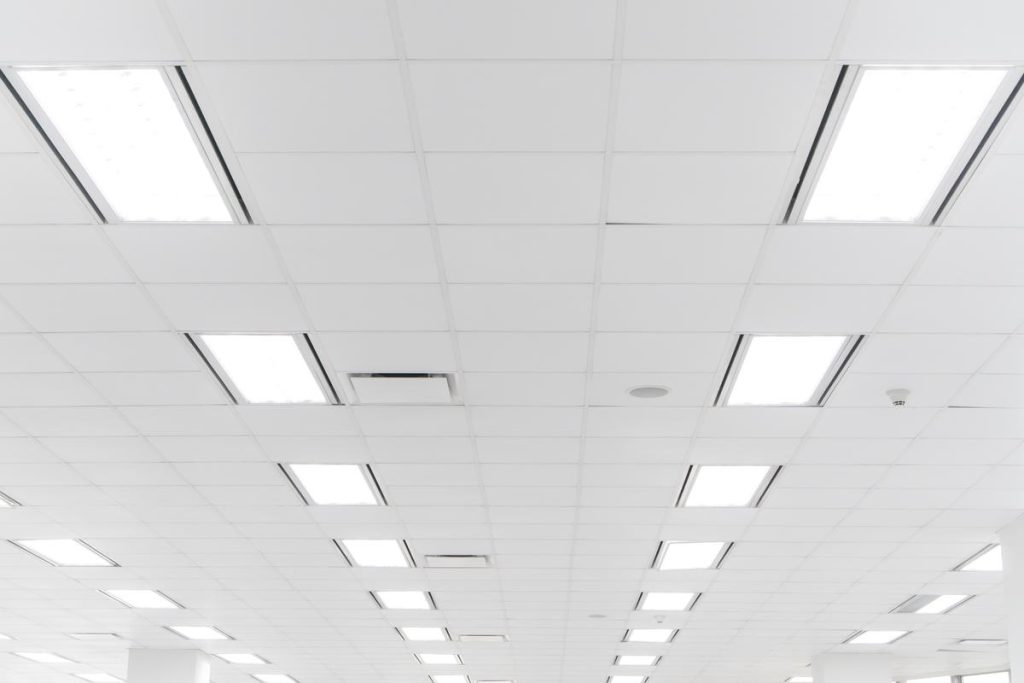
Halogen Lighting: Halogen lights produce a bright, natural light that is similar to daylight. This makes them a good choice for task lighting or display lighting. However, halogen lights can get very hot and are less energy-efficient compared to LEDs or even fluorescent lights, making them less suitable for large-scale commercial applications.
Incandescent Lighting: Incandescent lights are the traditional light bulbs that many people are familiar with. They produce a warm, inviting light that is excellent for creating a cozy atmosphere. However, they are the least energy-efficient of these options and have a relatively short lifespan. As a result, they are being phased out in many places in favor of more efficient options like LEDs.
Applications of Commercial Lighting
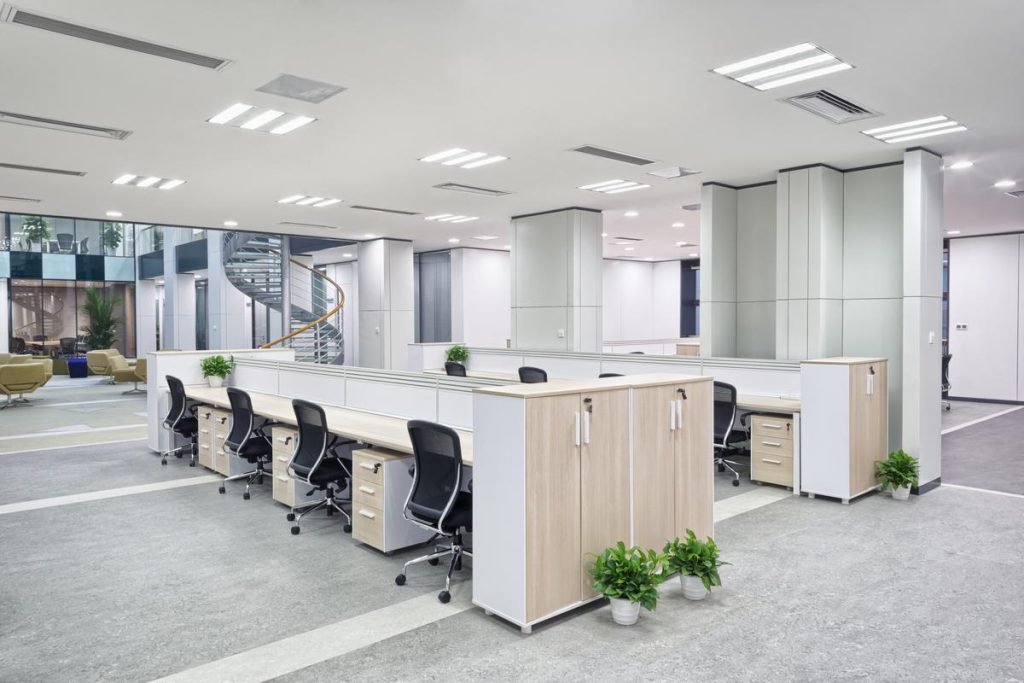
Offices and Workspaces: In offices, good lighting helps improve productivity and reduce eye strain. Task lighting is often employed at workstations, while ambient lighting is used in common areas. Some offices also use accent lighting to highlight design features.
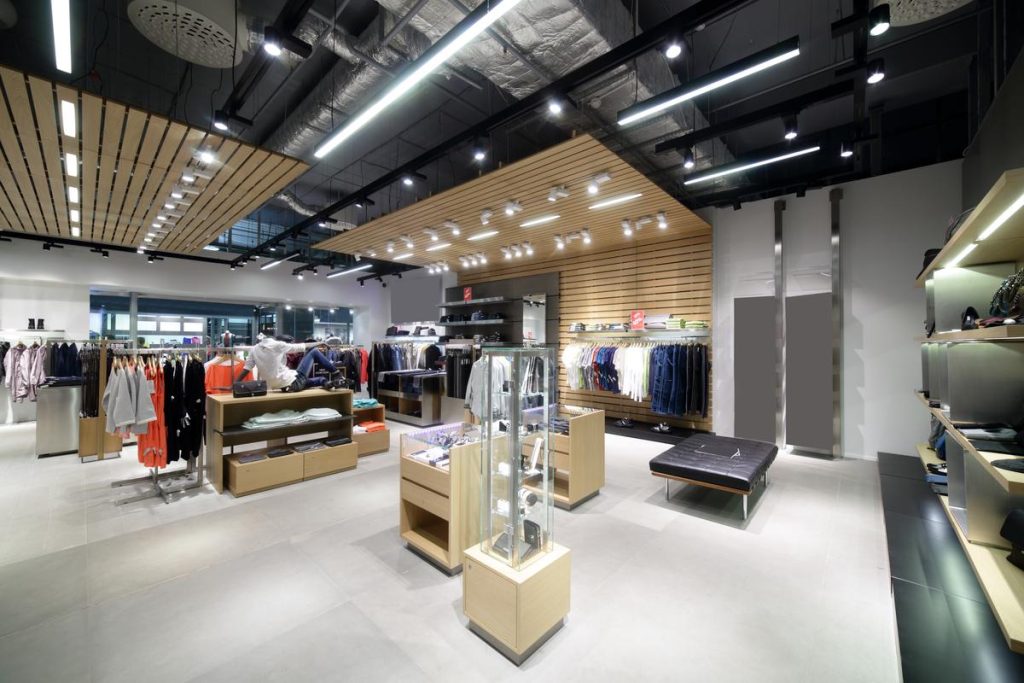
Retail and Showrooms: Retail spaces often use a mix of ambient, task, and accent lighting to highlight products, create a welcoming environment, and guide customers through the store. Different areas of a store might require different types of lighting, such as brighter lights in dressing rooms and dimmer lights in display areas.
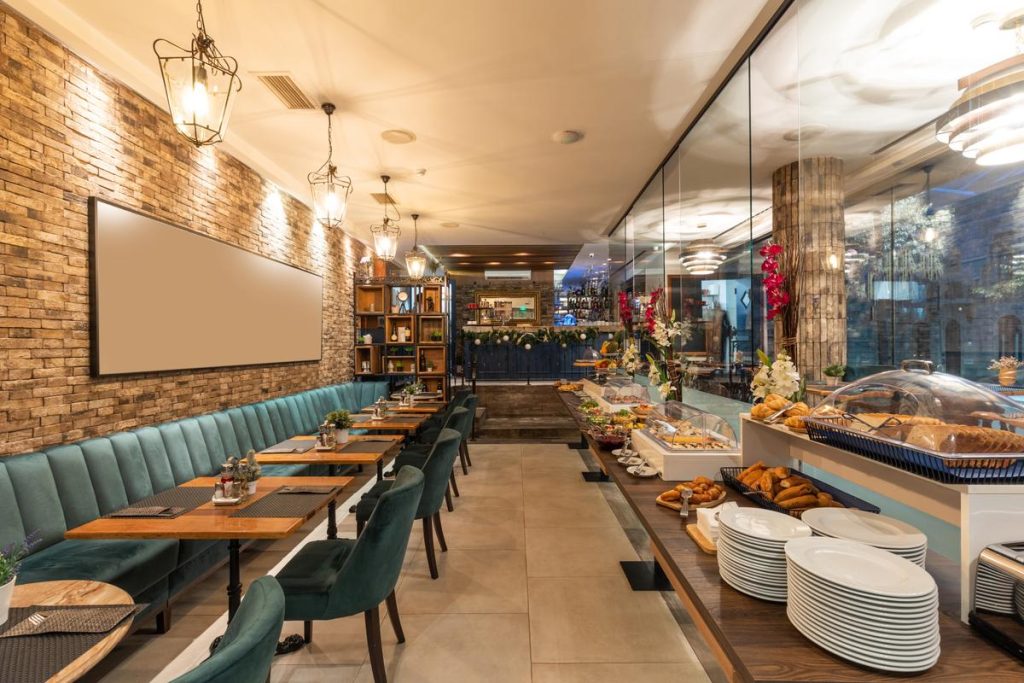
Restaurants and Bars: In food and beverage establishments, lighting helps create a specific mood or atmosphere. For example, fine dining restaurants often use warm, dim lighting for an intimate feel, while fast food places might use bright, cool lighting for a more energetic environment.
Healthcare Facilities: Hospitals, clinics, and other healthcare facilities require functional, high-quality lighting for various tasks such as medical procedures, patient care, and administrative work. These places also use specialized lighting, like blue lights in neonatal units and color-adjustable lights in patient rooms.
Educational Institutions: Schools and universities use bright, uniform lighting in classrooms to aid learning. They also use outdoor lighting for safety in parking lots and campuses, and task lighting in specific areas like libraries and labs.
Hotels: Hotels use a variety of lighting to enhance aesthetics and provide functionality. For example, lobbies might feature ambient and accent lighting to create a welcoming atmosphere, while guest rooms require a mix of general, task, and accent lighting.

Industrial Spaces: Warehouses, factories, and other industrial spaces typically require high bay lighting due to their high ceilings. These spaces need bright, uniform lighting for safety and productivity.
Public Spaces: Public areas like parks, streets, and municipal buildings require lighting for visibility and safety. Streetlights, park lights, and monument lighting all fall under this category.
Sports Facilities: Indoor and outdoor sports facilities need bright, uniform lighting that minimizes shadows and glare. Different sports may have different lighting requirements based on the size of the playing area and the speed of the game.
Theaters and Entertainment Venues: Theaters use specialized lighting systems to spotlight performers, create mood and atmosphere, and guide audiences. Cinemas require specific low-level lighting that doesn’t interfere with the screen.
Advantage Of Commercial Lighting
- Enhanced Visibility and Safety: Commercial lighting ensures better visibility in workspaces, retail stores, and public areas, reducing the risk of accidents and enhancing safety for employees and customers.
- Increased Productivity: Well-designed commercial lighting can positively impact productivity by providing a well-lit and comfortable environment for employees, reducing eyestrain and fatigue.
- Improved Customer Experience: Properly lit commercial spaces create a welcoming and inviting atmosphere for customers, leading to a better overall experience and potentially increasing customer retention and sales.
- Flexibility and Customization: Many commercial lighting systems offer flexibility and customization options, allowing businesses to adjust lighting levels and create different moods or settings to suit specific activities or events.
- Energy Efficiency: With the adoption of energy-efficient technologies like LED lighting, commercial lighting can significantly reduce energy consumption and lower operational costs over time.
- Longer Lifespan: LED and other modern lighting solutions have longer lifespans compared to traditional lighting technologies, reducing the frequency of bulb replacements and minimizing maintenance expenses.
- Environmental Benefits: Energy-efficient commercial lighting contributes to a reduced carbon footprint and lowers greenhouse gas emissions, helping businesses to be more environmentally responsible.
- Smart Lighting Control: Advanced commercial lighting systems can be integrated with smart controls, such as sensors and timers, allowing for automated lighting adjustments based on occupancy, daylight availability, or specific schedules.
- Aesthetic Appeal: Properly designed commercial lighting can enhance the aesthetic appeal of the space, highlighting architectural features and merchandise displays, which can positively influence customers’ perception of the business.
- Branding and Image: Thoughtfully designed lighting can reinforce a business’s brand identity and image, helping to create a distinct and memorable impression on customers and stakeholders.
- Compliance and Regulation: Adequate commercial lighting is often a legal requirement to ensure compliance with building codes, safety standards, and accessibility regulations.
- Increased Security: Well-lit exterior areas, parking lots, and entry points can deter criminal activities and enhance the security of commercial properties.
Disadvantage Of Commercial Lighting
- High Energy Costs: Commercial lighting, especially in large establishments, can lead to high energy consumption. This can significantly increase operational expenses, impacting the overall profitability of the business.
- Environmental Impact: Increased energy usage from commercial lighting contributes to a higher carbon footprint and environmental pollution. Traditional lighting technologies, such as incandescent and fluorescent bulbs, can also contain harmful substances like mercury, which poses a disposal challenge.
- Maintenance Expenses: Commercial lighting systems require regular maintenance and bulb replacements, particularly in high-ceiling spaces or hard-to-reach areas. This incurs additional costs and could disrupt regular operations during maintenance activities.
- Limited Lifespan: Many commercial lighting technologies have limited lifespans, leading to frequent replacements. This not only adds to maintenance costs but also generates more waste.
- Heat Generation: Some lighting technologies, like incandescent bulbs, emit significant heat. In large commercial spaces with numerous lights, this can contribute to increased indoor temperatures, potentially raising cooling costs.
- Inefficient Lighting Design: Poorly planned commercial lighting layouts can result in inadequate or excessive illumination in certain areas. Inefficient lighting design can negatively impact productivity and customer experience.
- Glare and Discomfort: Improper lighting angles or intensities can lead to glare, which can cause discomfort, eyestrain, and reduced visibility, affecting employee productivity and safety.
- Limited Customization: Many commercial lighting solutions offer limited customization options, making it challenging to create unique atmospheres that align with a business’s branding or desired ambiance.
- Dependency on the Electrical Grid: Commercial establishments rely heavily on a stable electrical grid for lighting. In case of power outages or disruptions, this dependency can lead to temporary closures or hinder business operations.
- Compatibility Issues with Retrofitting: When businesses want to upgrade to more energy-efficient lighting solutions, compatibility issues with existing fixtures and wiring can arise, leading to higher upgrade costs.
- Initial Investment: The upfront cost of installing commercial lighting systems can be significant, especially when considering energy-efficient and advanced technologies.
Factors to consider when choose commercial lighting
Despite these disadvantages, advancements in lighting technology, such as LED lighting and smart lighting controls, have been addressing some of these issues by offering energy efficiency, longer lifespans, and better customization options. Businesses must carefully evaluate their lighting needs and choose appropriate solutions to minimize the drawbacks while maximizing the benefits of commercial lighting.
- Application Purpose: The purpose of the lighting application will directly impact the type of lighting needed. For example, office spaces may require bright, clear lighting for tasks, whereas a restaurant might prefer warmer, dimmer lighting for ambiance.
| Commercial Area | Recommended Light Fixture | Advantages | Disadvantages |
| Offices | Tube lights, LED panels, linear suspension, pendant lighting, troffers, LED strips | – High energy efficiency – Long lifespan – No harmful emissions – Easy to maintain | – High upfront costs – Potential color shift |
| Shopping malls/retail stores | LED strips, spotlights, modular linear bar, pendant light, recessed lights | – High energy efficiency – Long lifespan – Can be customized to create different looks | – High upfront costs – Potential color shift |
| Restaurants & hotels | LED strips, recessed lights, lanterns, pendant lights, chandeliers | – High energy efficiency – Long lifespan – Can create a warm and inviting atmosphere | – High upfront costs – Potential color shift |
| Theatre & museum | Spotlights, track lights, LED strips, pendant lights, skyline linear light | – Can create a variety of moods and atmospheres – Can highlight specific areas or exhibits | – High upfront costs – Potential color shift |
| Gas station & auto-repair shops | High Bay LED, Low Bay LED Lights, Tri-Proof Lights | – High energy efficiency – Long lifespan – Can withstand harsh environments | – High upfront costs |
| Garages | Wraparound fixtures, canopy lights, UFO High Bays, shop light | – High energy efficiency – Long lifespan – Can withstand harsh environments | – High upfront costs |
| Outdoor | Flood Light, LED Neon Flex, Wall Packs, Wall Mount, Canopy, Wall Washer | – High energy efficiency – Long lifespan – Can withstand harsh environments | – High upfront costs |
- Beam Angle: The beam angle of a light fixture affects how the light is distributed in a space. A narrow beam angle (spotlight) focuses light on a small area, while a wide beam angle (floodlight) distributes light over a larger area.
- Flux & Field Angle: Light flux refers to the total quantity of light emitted by a source, measured in lumens (lm). The field angle, meanwhile, defines the area where light reaches at least 10% of its maximum intensity. Higher flux and wider field angles are generally preferable for lighting large spaces.
- Anti Glare (Visual Comfort): Glare can be uncomfortable or even harmful to the eyes. Select lighting fixtures with anti-glare features, especially in environments where people will be working under the lights for extended periods.
- Ceiling Height: The height of the ceiling will influence the type of lighting fixture that should be used. Higher ceilings might require high-bay lights, while lower ceilings might be better suited to recessed or surface-mounted lights.
- Ceiling Type: The type of ceiling can also impact the kind of lighting fixtures suitable for the space. For example, suspended ceilings might be well-suited to recessed lights, while hard ceilings could require surface-mounted fixtures.
- CRI Rating: The Color Rendering Index (CRI) measures the accuracy of a light source in revealing the true color of objects compared to an ideal or natural light source. Higher CRI ratings (closer to 100) indicate better color rendering, which can be important in spaces such as retail stores or art galleries.
- IP & IK Rating: IP (Ingress Protection) rating measures the degree of protection a fixture has against dust and water. An IK rating measures its resistance to impacts. These ratings are particularly important for outdoor lighting or in environments like kitchens or industrial spaces where fixtures might be exposed to dust, water, or impacts.
- Color Temperature: Measured in Kelvin (K), color temperature impacts the perceived warmth or coolness of the light. Lower temperatures (2,000-3,000K) give off a warm, yellowish light, while higher temperatures (5,000-6,500K) produce a cool, bluish light. Mid-range temperatures (3,500-4,500K) offer a neutral, white light.
- Maintenance: Consider how easy it will be to replace bulbs or fixtures when they fail, and the expected lifespan of the lights. LED lights, for instance, are typically more energy-efficient and longer-lasting than incandescent or fluorescent lights, reducing maintenance needs and costs over time.
Commercial Lighting Trends
Smart Lighting Systems: These involve the use of automation and control systems to optimize energy usage and adjust lighting based on factors like occupancy or time of day. Smart lighting systems can be programmed to dim or switch off when a room is unoccupied or during daylight hours, helping to reduce energy waste and lower costs.
Human-Centric Lighting: This approach focuses on the impact of lighting on human health and wellbeing. Research has shown that lighting — particularly the color temperature and intensity of light — can influence our mood, productivity, sleep patterns, and overall wellbeing. Human-centric lighting design seeks to replicate the natural progression of daylight, providing brighter, cooler light during the day and warmer, dimmer light in the evening to align with our circadian rhythms.
Wireless Lighting Controls: With the advent of wireless technology, it has become easier to control and manage lighting systems remotely. This can include adjusting brightness, changing color temperatures, or turning lights on and off from a mobile device or centralized control system. This not only enhances convenience but also allows for more flexibility in lighting design and layout.
Daylight Harvesting: This is a technique that makes use of natural light to illuminate indoor spaces, reducing the need for artificial lighting and thus conserving energy. This can involve the use of windows, skylights, light shelves, or reflective surfaces, and may be combined with smart controls that adjust artificial lighting based on the amount of available daylight.
Internet of Things (IoT) Integration: IoT technology allows for a greater level of interconnectivity and control in lighting systems. For example, sensors can collect data on lighting usage, energy consumption, and even factors like occupancy or ambient light levels, which can then be used to optimize lighting performance. IoT can also enable integration between lighting systems and other building systems, such as HVAC or security, creating a more comprehensive and efficient building management system.
In conclusion
Commercial lighting is an essential component in various settings, including offices, retail spaces, hospitality venues, educational institutions, healthcare facilities, and public spaces. Its primary function is to ensure a safe, comfortable, and productive environment. However, it also plays a significant role in creating atmosphere, highlighting architectural or product features, and even influencing behavior.
