
Do you have any knowledge about the color temperature in your home? Do you know how to properly select the color temperature for different rooms, including LED recessed lights and pendant lights? In fact, there is no absolute good or bad when it comes to color temperature; it’s all about whether it is suitable for a particular area. Let’s delve into it and learn more.

What is color temperature?
Color temperature refers to the perceived color variation of light waves at different energy levels by the human eye. In the calculation of color temperature, it is measured in Kelvin (K), with 0° Kelvin corresponding to -273 ° Celsius, the starting point based on blackbody radiation. As the blackbody is heated and energy increases, it enters the visible light spectrum. For example, at 2800K, the emitted light is similar to that of a light bulb, so we say the light bulb has a color temperature of 2800K. The color temperature range of visible light varies from low to high, transitioning from orange-red to white to blue. The standard color temperature of daylight is approximately 5200-5500K, while tungsten filament lamps typically have a color temperature of around 2800K. As a result, LEDs with different color temperatures emit different hues of light. The choice of color temperature depends on the intended use, primarily determined by your specific requirements.
Know the differences between different color temperatures.
Color temperature (K) refers to the color of light, with lower color temperatures indicating warmer light and higher color temperatures indicating cooler light. Warm color temperatures tend to have a red or yellowish hue, while cool color temperatures lean towards blue or cyan.
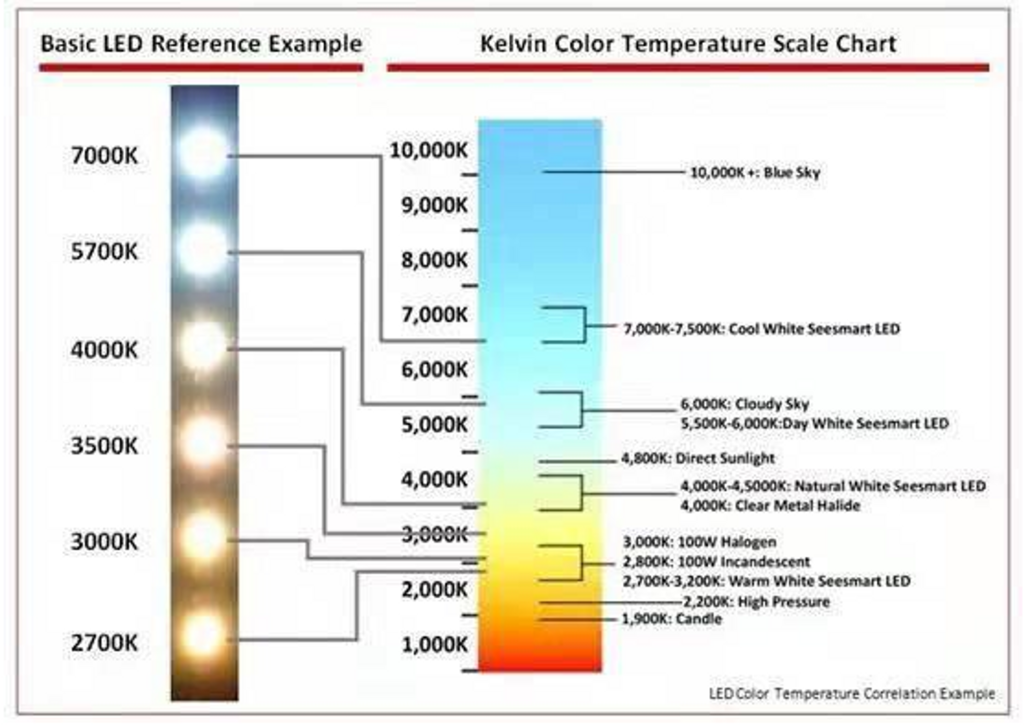
Color temperature can be classified into three levels: low, medium, and high. Let’s explore the effects of different color temperatures:
2700K: Yellowish hue, warm light, commonly used for illuminating gold jewelry cabinets.
3000K: Warm yellowish hue, soft lighting, creates a cozy and pleasant atmosphere.
3500K: Warm white hue, versatile application, creates a relaxed and leisurely ambiance.
4000K: Natural light hue, comfortable and enjoyable, helps alleviate color temperature indecision.
4500K: Cool hue, bright lighting, ideal for creating well-lit spaces.
How to choose the correct color temperature for recessed dowlights in your home?
In designs with a main light source, both recessed downlights and spotlights can be used for supplementary lighting. In designs without a main light source, such as the absence of ceiling lights and pendant lights, recessed lights can be used for general lighting, while spotlights are typically utilized for accent and decorative lighting.
A consistent option for the entire home is to use a single color temperature of around 4000K, which is warm white light. However, it’s worth noting that there is no mandatory standard for color temperature, and it should be based on personal preferences and habits. Additionally, it is essential to consider the home’s decor style and color scheme. Given the versatility of lighting needs, it is advisable to consider using adjustable color temperature fixtures.

From the perspective of interior design styles:
- For Chinese-style décor, low color temperature warm light around 2700K is suitable.
- Japanese-style, New Chinese-style, and European-style décor can benefit from warm light around 3000K.
- Nordic-style and modern décor can be complemented by a middle color temperature of around 3500K.
- Minimalist, luxury, and industrial styles are well-suited for natural white light around 4000K, which is also warm white light.
Considering the functional use of different areas in a house, there are recommended color temperature ranges:
For the entryway and living room, the recommended color temperature range is from 2700K to 5700K, with a suggested use of 4000K lighting. Since the living room is a place for residents and guests, using lighting around 4000K provides a bright and elegant ambiance.

In the bedroom, the color temperature range is from 2700K to 4200K, and it is common to use lighting around 3000K to 3500K. This slightly yellowish light creates a warm and atmospheric atmosphere. Bedrooms are meant for relaxation, rest, and sleep, especially for individuals with high work and life stress. This color temperature lighting helps promote relaxation and sleep. However, for older individuals with reduced sensitivity to light, using slightly higher color temperature and brightness is recommended for better visibility and safety.
In the kitchen, the color temperature range is from 4000K to 5700K, and lighting around 5000K is suitable. Since tasks such as chopping and food preparation are performed in the kitchen, brighter lighting with a higher color temperature is preferred. However, if you have adapted to the warmth of 4000K warm white light and increased the brightness appropriately, it can also be suitable.
The dining room can use warm lighting with a color temperature range of 3000K to 4000K. This creates a cozy and comfortable dining atmosphere and enhances the presentation of dishes. When there are fewer people, the color temperature can be lower. When guests arrive and there are more people, the color temperature and brightness can be increased to facilitate dining and communication.

In the bathroom, the color temperature range is from 3000K to 5500K. For smaller bathrooms, it is recommended to use lighting around 5000K with higher brightness to create a spacious and bright feeling. Using warm light may result in inadequate lighting in certain areas and make the space feel more confined. For larger bathrooms, lighting can be divided into different zones. Warm lighting can be used in the bathing area, around 4000K above the toilet, and higher brightness lighting can be used in the vanity area. Overall, a general lighting of around 4000K is suitable for most areas in the bathroom. Adjusting the color temperature of downlights and spotlights can be challenging, but nowadays there are many common options available with adjustable color temperatures. If there are lighting fixtures with adjustable color temperature, it is recommended to choose those. For example, in the living room, although we often use lighting with a color temperature of 4000K, sometimes it’s nice to have a more cozy light around 3000K for casual conversations and heartfelt discussions.
The previous text illustrates the relationship between color temperatures like 2700K, 3000K, and 3500K, and their suitability for home environments. The choice of color temperature for indoor lighting should align with the basic color scheme of the interior design. Using the right color temperature can greatly enhance the overall effect of the interior decor.
Different color temperatures also have an impact on human emotions. Warm colors create a sense of comfort, while cool colors promote clear thinking. Individuals suffering from depression should avoid prolonged exposure to environments with color temperatures above 4000K. Prolonged use of color temperatures above 6500K may potentially lead to macular degeneration of the retina. Therefore, considering these factors, it is generally more appropriate to choose a lower color temperature around 2500K-3000K (warm white light) for residential lighting.
