
What Are Light Emitting Diodes or called LED?
Have you ever stopped to wonder about those tiny, bright lights you see everywhere? From your phone screens to traffic lights, LEDs, or Light Emitting Diodes, have invaded almost every corner of our daily lives. LEDs are semiconductor devices that emit light when an electrical current passes through them. Unlike traditional incandescent bulbs that produce light by heating a filament, LEDs light up due to the movement of electrons in the semiconductor material. And guess what? They do it using a fraction of the energy an old-school bulb would consume. LEDs are revolutionizing the world of lighting, offering a brighter, more energy-efficient, and durable option. Next time you see a vibrant sign or a room lit up, chances are, it’s the work of LEDs. Neat, right?

History of LEDs
Ever thought about how the magic of LEDs started? Let’s take a quick journey back in time. The LED’s humble beginnings trace back to the early 20th century. In 1907, British scientist H.J. Round discovered electroluminescence when applying a voltage to silicon carbide. But it wasn’t until 1962 that the first practical visible-spectrum LED was developed by Nick Holonyak Jr. Imagine, what began as a simple red diode in laboratories has now diversified into a spectrum of colors lighting up our world. From the initial dim red LED of the 60s, the 90s saw the advent of the blue LED by Shuji Nakamura. And that, my friend, was a game-changer! Why? Because combining blue with green and red LEDs gave us white light, paving the way for today’s myriad LED applications. Who’d have thought that century-old technology would still be illuminating our path in such innovative ways?
Benefits of LED Lighting
Energy Efficiency and Cost Savings:
Did you know that LEDs consume up to 90% less power than incandescent bulbs? That’s right! Not only are they kinder to your electricity bill, but they’re also champions of efficiency. An LED’s lower power usage means less strain on power plants, leading to reduced greenhouse gas emissions. And guess what this translates to? A thinner electricity bill and a healthier planet. Win-win!
Environmental Benefits:
Beyond energy savings, LEDs are free from harmful elements like mercury, commonly found in many fluorescent lighting solutions. Plus, their longer lifespan means fewer bulbs end up in landfills. So, while you’re lighting up your space, you’re also doing Mother Earth a solid favor.
Durability and Longevity:
Drop an old bulb, and you’ll get a mess. But LEDs? They’re robust! Built without fragile filaments or glass, LEDs can withstand bumps, vibrations, and even some harsh weather conditions. And longevity? Some LEDs boast lifespans of up to 50,000 hours. That’s like leaving a bulb on for six straight years!
Design Versatility:
LEDs are the chameleons of the lighting world. They can fit into the tiniest of spaces, emit any color without using filters, and can be dimmed to set the mood. Whether you’re setting a romantic dinner ambiance or brightening up a workspace, LEDs got you covered.
Extensive Light Color Options:
Remember the RGB combo we talked about earlier? It means LEDs can produce over 16 million colors. From the warm, cozy hues for your living room to the cool blues for office spaces, you can customize the feel of any room with LEDs.
Instant On:
Say goodbye to the “warm-up” time you’d get with some other bulbs. LEDs light up instantly to full brightness without the gradual ramping up. Fancy, isn’t it?
How Do LEDs Work?
Ever played with magnets and felt that push or pull? At their core, LEDs operate based on similar principles of attraction, but with electrons. LEDs are made of semiconductor materials. When electricity flows through them, electrons move and fill “holes” within the material. As these electrons drop into these holes, they release energy in the form of photons. It’s this dance of electrons, dropping and emitting light, that makes LEDs glow. The type of semiconductor material and the energy gap determine the color of light. And, here’s the fun part: unlike old-school bulbs that waste energy as heat, LEDs keep things cool, literally, directing most of their energy to produce light. That’s some efficient electron dance, wouldn’t you say?
Types of LEDs
Standard LEDs:
Standard LEDs are the most common type of LED. They are made of a small chip of semiconducting material and are encased in a clear epoxy resin package. They emit light when an electric current is applied to the chip. Standard LEDs are durable, have a long lifespan, and are highly energy-efficient. They are used in a wide variety of applications, including lighting displays, automotive lighting, electronic equipment, and home appliances.
Here are some of the key benefits of standard LEDs:
- Durable and have a long lifespan (up to 100,000 hours)
- Highly energy-efficient (up to 90% less energy than incandescent bulbs)
- Emit very little heat
- Available in a wide range of colors, sizes, and shapes
- Relatively inexpensive
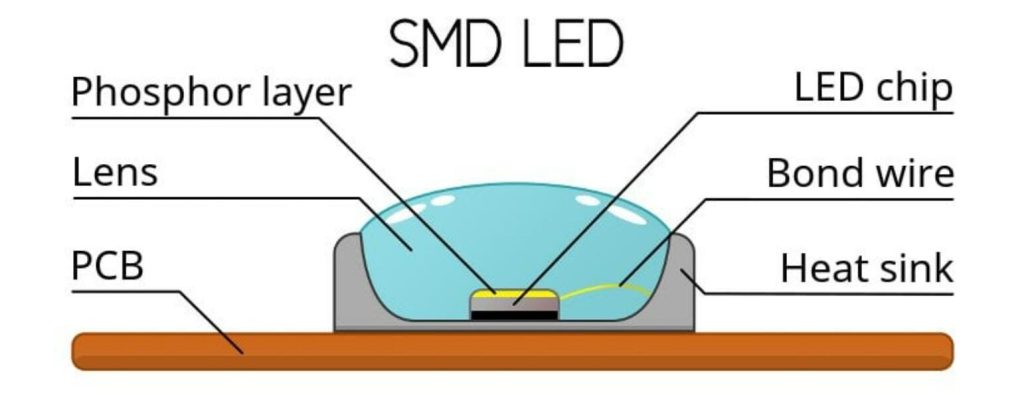
High-power LEDs:
High-power LEDs are designed to produce high light output while consuming low amounts of energy. They are ideal for lighting, automotive, signage, and electronics applications.
High-power LEDs differ from standard LEDs in their construction and design. They are made up of multiple LED chips mounted on a single substrate, which helps to increase their brightness and output. Additionally, they use a larger heat sink to dissipate the heat generated by the high output, protecting the LED from damage.
High-power LEDs have several advantages, including:
- High efficiency: They produce a high amount of light output per unit of energy consumed.
- Durability: They are more durable than traditional light sources and have a much longer lifespan.
- Versatility: They are available in various colors and color temperatures, making them suitable for a wide range of applications.
High-power LEDs are used in a variety of applications, including:
- General lighting: They can be used to replace traditional light bulbs in homes, offices, and other buildings.
- Task lighting: They can be used to provide focused light for tasks such as reading, working, and cooking.
- Specialty lighting: They can be used for applications such as grow lights, aquarium lighting, and stage lighting.
Organic LEDs (OLEDs):
Heard of OLED TVs with breathtaking displays? This is where OLEDs shine! Instead of semiconductors, they use organic compounds. They’re flexible, can be made transparent, and promise vibrant displays that make movie nights magical.
Polymer LEDs (PLEDs):
Mixing the best of plastics and LEDs, PLEDs offer flexibility in design. They’re lightweight, and because they can be printed, we’re looking at a future where rollable screens might just be the norm.
Quantum Dot LEDs (QD-LEDs):
Dive deep into nanotechnology, and you’ll find Quantum Dots. These tiny semiconductor particles redefine brightness and color purity, giving us displays that are a treat for the eyes.
Ultraviolet LEDs (UV-LEDs):
Beyond the visible spectrum, UV-LEDs serve unique purposes. From disinfecting water to currency verification and even some medical applications, their uses are as intriguing as their name.
How are LEDs made?
The journey of creating an LED is a blend of science, technology, and a touch of art.
Materials Used in LED Manufacturing:
At the heart of every LED is a semiconductor. Depending on the desired color and function, materials like gallium arsenide, gallium nitride, or silicon carbide are chosen. The purer the material, the better the LED’s performance.
LED Manufacturing Process:
- 1st Step: Wafer Preparation: Imagine a thin, crispy wafer, but for LEDs. This wafer is sliced from a bulk semiconductor, setting the stage for the magic that follows.
- 2nd Step: Epitaxy: In this fancy-sounding step, a layer of crystal is grown on the wafer. It’s this layer that decides the color and efficiency of the LED.
- 3rd Step: Doping: No, it’s not what you’re thinking! Doping involves introducing impurities to modify the semiconductor’s properties, determining how electrons will flow.
- 4th Step: Contact Formation: It’s connection time! Metal contacts are added to allow current to flow through the LED.
- 5th Step: Etching: Like carving a sculpture, unwanted material is etched away to give the LED its final shape.
- 6th Step: Encapsulation: To protect the LED from the environment, it’s encapsulated in a plastic shell.
- Final Step: Testing: Before it lights up our world, each LED undergoes rigorous testing to ensure it’s up to the mark.
Differences Between LEDs and Traditional Light Sources
| Feature | LEDs | Traditional Light Sources |
|---|---|---|
| Energy Efficiency | Highly efficient; consumes less energy (up to 90% less) | Less efficient; consumes more energy |
| Lifespan | Longer lifespan; up to 50,000 hours | Shorter lifespan; up to 10,000 hours |
| Heat Generation | Low heat generation | High heat generation |
| Light Quality | High-quality light, available in many colors | Limited range of colors available |
| Size and Shape | Small and compact, available in various shapes | Bulky and limited shape options |
| Environmental Impact | Environmentally friendly, no toxic materials | Contain toxic substances |
| Instant On/Off | Instant On/Off | Slow to warm up and turn off |
| Cost | Higher initial cost, but cheaper in the long run | Lower initial cost, but the higher operating cost |
| Maintenance | Low maintenance required | High maintenance required |
| Compatibility | Compatible with electronic controls | Limited compatibility with electronic controls |
| Dimming | Dimmable with compatible controls | Limited dimming capability |
| Color Temperature | Available in a wide range of color temperatures, from warm white to cool white | Limited range of color temperatures |
| CRI (Color Rendering Index) | High CRI (>90), which means they render colors accurately | Lower CRI (<80), which means they may not render colors accurately |
Ever wondered how our grandparents read books at night? Or how streets were illuminated before the dazzling LEDs took over? Let’s dive into the stark differences between LEDs and their old-school counterparts.
The traditional bulb, often referred to as an incandescent bulb, has been around for over a century. Here’s the kicker: they’re pretty inefficient. About 90% of their energy is given off as heat. Ever tried touching one after it’s on for a while? Ouch! LEDs, on the other hand, remain cool to the touch, directing most of their energy towards producing light.
Fluorescent lamps, another household name, contain a bit of mercury vapor. When this vapor gets electrified, it produces UV light, which then interacts with a phosphor coating inside the lamp to produce visible light. LEDs? They’re a simpler affair, emitting light directly and without the need for hazardous materials.
And then there’s lifespan. An average incandescent bulb might last about 1,000 hours. An LED? They’re the marathon runners, boasting lifespans of up to 50,000 hours or more. That’s not just saving on replacement costs, but also reducing waste.
In terms of color variety and brightness control, LEDs take the crown. While traditional sources need filters or shades to change their hue, LEDs can be fine-tuned to produce a spectrum of colors and brightness levels.
Understanding LED Performance
LED Specifications:
Luminous efficacy measures how much visible light an LED source produces. It is the ratio of the luminous flux emitted by a light source to the power consumed by the light source. The unit of measurement for luminous efficacy is lumens per watt (lm/W). A higher luminous efficacy number means that the LED is more efficient and makes more light for each unit of power it uses.
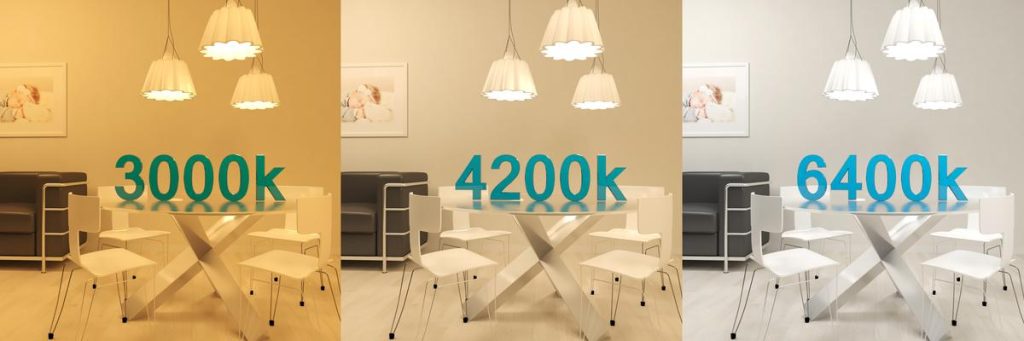
Color temperature measures the light’s appearance in terms of color from an LED source. It is the temperature of a theoretical blackbody radiator that emits light of the same color as the LED. The unit of measurement for color temperature is Kelvin (K). LEDs can emit light in a wide range of color temperatures, from warm white (2700K–3000K) to cool white (5000K–6500K). A lower color temperature value indicates a warmer (yellowish) light, while a higher value indicates a cooler (bluish) light.
Factors Affecting LED Performance:
Temperature, voltage fluctuations, or even the quality of materials used can influence an LED’s performance. Did you know that LEDs prefer cooler environments? They tend to shine brighter and last longer when things don’t get too toasty.
LED Testing and Certification:
Before LEDs make their way to the shelves or online carts, they undergo a series of stringent tests. From longevity checks to brightness consistency and even color accuracy, these tests ensure you get the best bang for your buck. And those certifications on LED packaging? Think of them as seals of approval from lighting experts.
Common Applications of LEDs
Lighting And Illumination:
This one’s a no-brainer. From homes to offices, malls to stadiums, LEDs have become the go-to for lighting solutions. They’re bright, efficient, and can set any mood you fancy.
Display Technology:
Admit it, binge-watching your favorite series or gaming just wouldn’t be the same without those vibrant LED screens. Their ability to produce deep blacks and vivid colors make for immersive experiences.
Automotive Industry:
Ever noticed the sleek headlights of modern cars or the intricate tail light designs? That’s LEDs working their magic, ensuring you drive in style while staying safe.
Medical Equipment:
From diagnostic tools to surgical lighting, LEDs have found their niche in the medical world. Their precise lighting capabilities play a pivotal role in many medical procedures.
Communication And Signaling:
LEDs aren’t just about bright lights. They also play a role in optical communication systems, data transmission, and even those traffic lights that ensure smooth commutes.
Maintenance of LEDs
Cleaning LEDs:
Ever noticed how everything seems brighter after a good clean? LEDs are no different. Dust and debris can accumulate on the surface, dimming their brilliance. But here’s the good news: maintaining LEDs is a breeze. A gentle wipe with a soft, lint-free cloth is all you need. If there’s some stubborn grime, a mix of mild soap and water can come to the rescue. Just ensure the power is off and the LED is cool to touch. And always avoid abrasive materials or chemicals that might harm the LED or its finish.
Handling LEDs:
Treat your LEDs like the tech gems they are! While they’re robust, it’s essential to handle them with care, especially during installation or replacement. Always hold them by their base or fixture, avoiding direct touch to the LED chip. And remember, sudden shocks or drops might damage the internal components. So, steady hands, and perhaps a bit of patience, go a long way.
Troubleshooting of LEDs
Ever turned on a switch and your LED didn’t light up, or perhaps, flickered like it’s at a disco? Let’s dive into some common LED hiccups and their fixes.
Flickering: This can be due to voltage fluctuations or a mismatched dimmer switch. Ensure you’re using LED-compatible dimmers and check your home’s voltage stability.
Not turning on: First, the basics – is the power supply intact? If yes, it might be time to check the LED driver or connections. Sometimes, a simple reconnection can do the trick.
Uneven brightness: If one LED is dimmer than another, it could be a sign of a dying LED or issues with the driver. Replacing either usually solves the problem.
Remember, while troubleshooting, safety first! Always switch off the power source and let the LED cool down before poking around.
Future Developments in LED Technology
Improvements in Energy Efficiency:
The LED evolution isn’t over! As research continues, we can expect even more efficient LEDs that consume lesser power, translating to bigger savings and a happier environment.
Advancements in Manufacturing Techniques:
With technology leaping bounds, future LEDs might be crafted using newer techniques that make them more affordable and even more versatile in design and application.
The Potential for Fully Organic LEDs:
While OLEDs have paved the way, imagine a world where LEDs are crafted entirely from organic materials. Not only would they be more sustainable, but they could also offer unparalleled flexibility in design and application. Think about wallpapers that illuminate or clothes that glow in the dark.
Final Thoughts
In the vast universe of technology, the journey of LEDs is nothing short of a luminescent fairytale. They’ve redefined how we see the world, literally and metaphorically. From tiny indicator lights to dazzling displays, their applications are as diverse as they are brilliant.
But beyond their glittering facades lies a story of relentless innovation. It’s a story that teaches us the value of persistence, the wonders of science, and the beauty of light. LEDs, in many ways, are not just about illumination but also inspiration.
As we stand on the brink of even more technological advancements, one can’t help but wonder: What’s next for LEDs? Well, if history is any indication, the future is not just bright; it’s radiant.
So, the next time you switch on that LED bulb or get lost in the hues of your LED screen, take a moment to appreciate the marvel that it is. In a rapidly changing world, the glow of LEDs serves as a constant reminder of human ingenuity and the endless possibilities that await.
